READ TIME: 5 Minutes
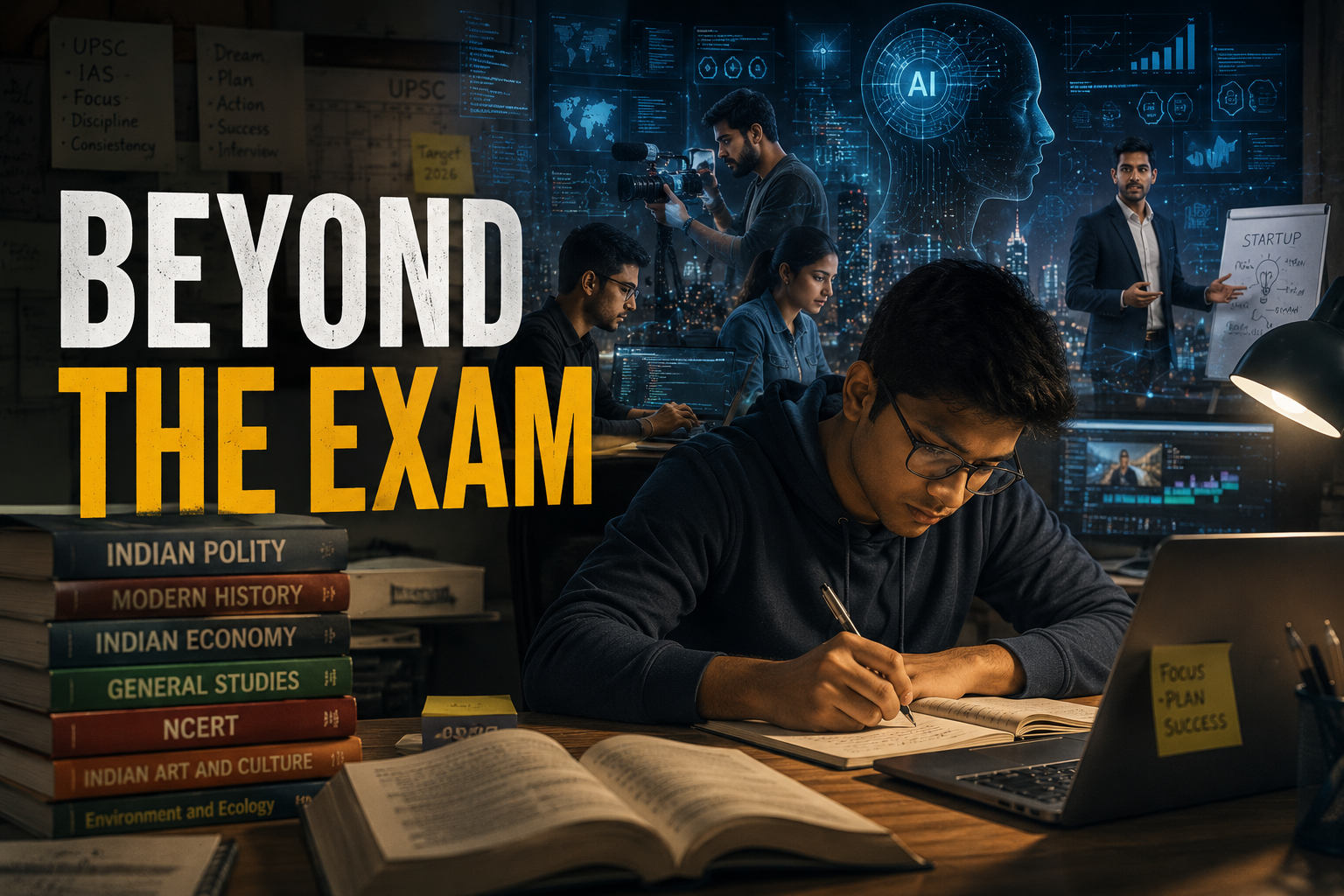
For generations, the Indian aspirant followed a familiar roadmap: study hard, crack a competitive exam, secure a stable job and build a secure future.
But a growing question now confronts millions of students:
Will that formula still work in the next decade?
As artificial intelligence transforms industries and new forms of work emerge, the future of aspirants may look very different from the past.
What Is The Opportunity?
The opportunity is no longer limited to government jobs, engineering, medicine or traditional corporate careers.
Today, young Indians can build careers in artificial intelligence, digital marketing, content creation, data analytics, cybersecurity, product management, e-commerce, gaming, freelancing and entrepreneurship.
This does not mean competitive exams have lost relevance. Rather, the opportunity landscape has expanded significantly.
Who Is It For?
This shift affects:
• UPSC and government job aspirants
• College students
• Fresh graduates
• Working professionals
• Rural youth entering the workforce
• Creators and freelancers
• First-generation entrepreneurs
Anyone planning a career in the next decade will likely need to understand both traditional and emerging opportunities.
How Does It Work?
The future job market increasingly rewards people who can learn, adapt and solve problems.
While degrees and examinations remain important filters, employers are increasingly evaluating portfolios, practical experience, communication skills and digital capabilities.
Many opportunities can now be accessed through online learning platforms, internships, freelance projects and personal brand building.
Skills Required
SKILL ROADMAP
Beginner:
• Communication
• Digital literacy
• Problem-solving
Intermediate:
• AI tools
• Data analysis
• Content creation
• Project management
Advanced:
• Leadership
• Entrepreneurship
• Technical specialization
• Strategic thinking
CAREER SCORECARD
Demand Level:
High
Income Potential:
₹₹₹₹
Growth Potential:
High
Entry Difficulty:
Moderate
Future Outlook:
Positive
Income Potential
Income varies significantly depending on the path chosen.
While government jobs offer stability, emerging fields such as AI, software development, consulting, content creation and entrepreneurship can provide substantially higher earning potential for some individuals.
The key difference is that these careers often reward skills, adaptability and continuous learning rather than a single examination result.
Why It Matters
India has one of the world’s youngest populations. Millions of students continue preparing for a limited number of government vacancies while the private sector and digital economy create entirely new opportunities. The challenge is not choosing between exams and skills; it is understanding that future success may require both. Those who combine academic qualifications with practical capabilities are likely to be better positioned in a rapidly changing job market.
Analysis
The most important trend is that the definition of an aspirant is expanding.
In the past, an aspirant was often someone preparing for a government job or competitive examination. In the future, an aspirant may be a startup founder, creator, AI specialist, freelancer or community builder.
This does not mean traditional careers will disappear. India will continue to need civil servants, teachers, doctors and engineers.
However, the next decade may reward flexibility more than predictability.
The risk for young people is not failing an exam.
The bigger risk may be preparing for a world that no longer exists.
India’s advantage is its scale, talent pool and growing digital economy. Those who continuously learn new skills while maintaining strong educational foundations are likely to benefit the most.
Action Plan
• Continue preparing for your chosen exams if they align with your goals.
• Learn at least one digital skill alongside academic preparation.
• Build a portfolio rather than relying solely on certificates.
• Use AI tools productively instead of fearing them.
• Follow industry trends and emerging sectors.
• Develop communication and problem-solving abilities.
Conclusion
Should someone seriously consider opportunities beyond traditional exams in 2026 and beyond?
Yes.
Competitive exams remain valuable, but they are no longer the only gateway to success. The future belongs to aspirants who can combine knowledge with skills, adaptability with ambition, and qualifications with real-world capability.
The question is no longer whether opportunities exist.
The question is whether aspirants are preparing for them.
With AI inputs