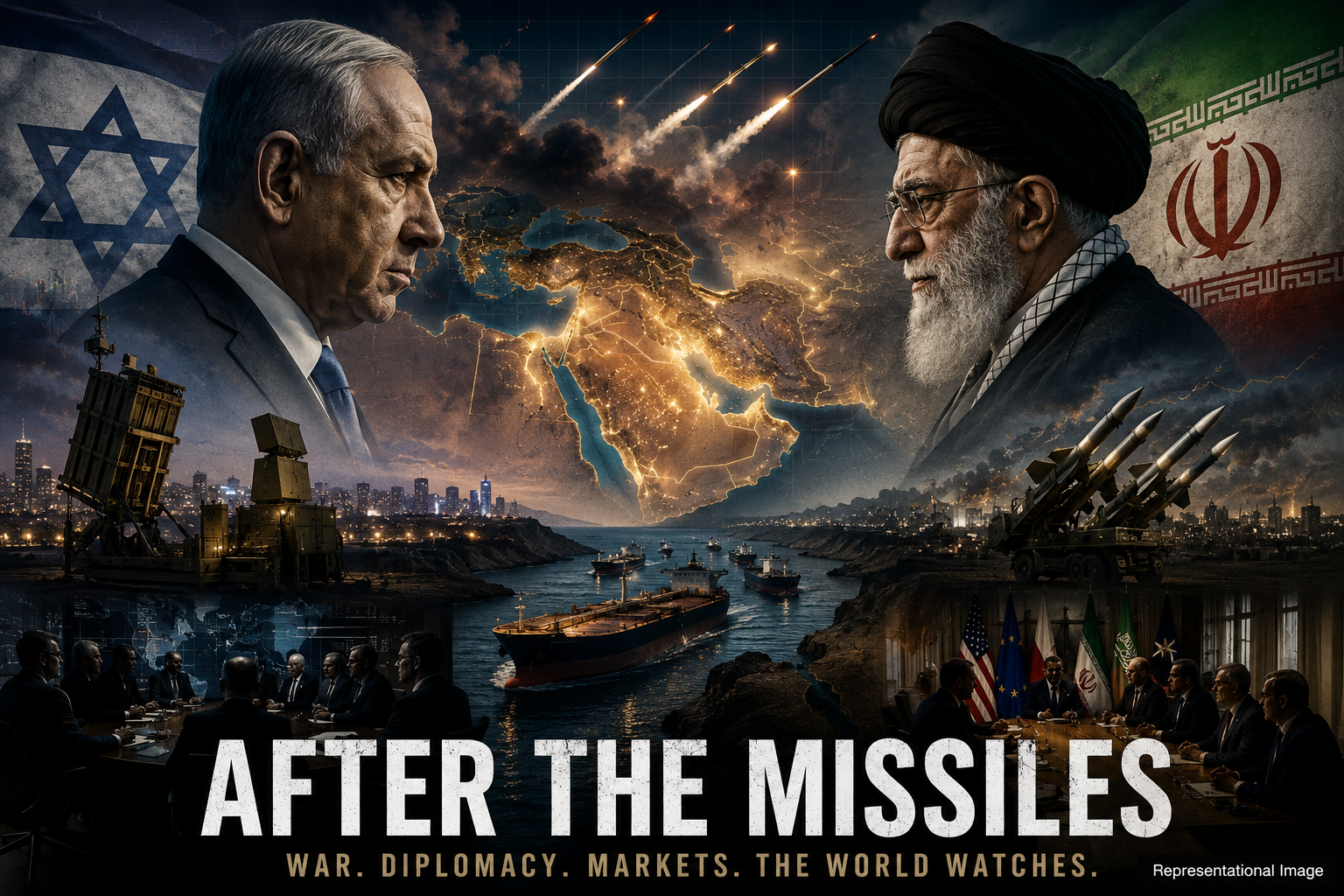
For decades, Iran and Israel fought each other indirectly through proxy groups, intelligence operations, cyber campaigns and regional allies.
That changed when the two countries entered direct military confrontation, creating one of the most serious Middle East crises in recent years.
The conflict has expanded beyond a regional security issue. It now affects global energy markets, international diplomacy, military alliances and economic stability. While diplomatic efforts and ceasefire discussions continue, military tensions remain elevated and the situation remains uncertain.
For countries such as the United States, India and Pakistan, the consequences could extend far beyond the battlefield.
What Happened
The current phase of the conflict escalated after Israeli military operations targeted Iranian military and strategic assets. Israeli officials said the strikes were aimed at addressing security threats and degrading capabilities they viewed as dangerous to Israel’s national security.
Iran responded with missile and drone attacks against Israeli targets. The exchanges marked a significant shift in the long-running rivalry between the two countries, transforming a shadow conflict into a direct military confrontation.
According to official statements and international reporting, military installations, security facilities and strategic infrastructure have been among the primary targets. Reports of casualties and damage have emerged from both sides, although exact figures vary and remain difficult to independently verify in some instances.
The United States has remained closely involved through military coordination, regional security operations and diplomatic engagement aimed at preventing a broader regional war.
Current Status
The conflict currently appears to be in a fragile phase rather than a full-scale regional war.
Neither Iran nor Israel has achieved a decisive strategic victory. Both countries continue to maintain military readiness while diplomatic efforts remain active behind the scenes.
International actors, including the United States and several regional governments, continue to push for de-escalation and a sustainable diplomatic framework.
However, the risk of renewed escalation remains significant. Military assets remain deployed, regional tensions continue, and analysts warn that a major incident could quickly trigger another round of confrontation.
The immediate question is no longer whether Iran and Israel can directly strike each other. That has already been demonstrated. The bigger question is whether the region can prevent recurring cycles of escalation.
Background
The rivalry between Iran and Israel dates back decades and has intensified through conflicts involving Hezbollah in Lebanon, armed groups in Gaza, developments in Syria and broader regional competition.
Israel has long viewed Iran’s military and nuclear ambitions as a strategic threat. Iran, meanwhile, has consistently opposed Israeli regional policies and positioned itself as a leading supporter of anti-Israel groups across the region.
For years, both sides largely avoided direct military confrontation, preferring covert operations, proxy conflicts and intelligence warfare.
The recent exchanges represent a significant departure from that pattern.
Why It Matters
The implications extend well beyond Iran and Israel.
For citizens worldwide, the most immediate concern is economic. The Middle East remains central to global energy markets, and any prolonged instability raises concerns about oil supplies and transportation routes.
The Strait of Hormuz remains particularly important because a significant share of global oil shipments passes through the waterway. Any disruption could affect fuel prices, inflation and economic growth across multiple countries.
For governments, the conflict creates diplomatic and security challenges. For businesses, uncertainty increases costs and complicates planning.
The crisis demonstrates how a regional military confrontation can rapidly become a global economic issue.
Analysis
The most important lesson from this conflict is that military power alone rarely resolves long-term geopolitical disputes.
Both Iran and Israel have demonstrated military capabilities. Yet neither side appears capable of securing a decisive outcome that eliminates the underlying causes of the confrontation.
For the United States, the crisis creates a strategic dilemma.
Washington remains committed to Israel’s security while also attempting to focus on competition with China, economic priorities and broader Indo-Pacific strategy. Every major Middle East crisis requires additional diplomatic attention, military resources and political capital.
For India, the stakes are largely economic.
India imports a significant portion of its energy requirements and relies heavily on secure maritime trade routes connecting the Gulf region to global markets. Any disruption can affect inflation, industrial costs and overall economic stability.
India also maintains relationships across the Middle East, making regional stability an important foreign policy priority.
For Pakistan, the situation is more complex.
Pakistan shares a border with Iran and maintains diplomatic, economic and religious ties across the broader Muslim world. Islamabad must carefully navigate its relationships while avoiding becoming entangled in regional rivalries.
The larger trend is clear: the Middle East remains one of the world’s most consequential geopolitical regions, and developments there continue to shape global politics, energy markets and security calculations.
POLITICAL IMPACT
The conflict has reinforced existing geopolitical divisions while highlighting the importance of diplomacy and regional mediation.
Countries capable of maintaining communication with multiple stakeholders may play increasingly important roles in future negotiations.
The crisis has also demonstrated that military escalation can quickly create international consequences far beyond the immediate conflict zone.
MARKET IMPACT
Energy markets remain highly sensitive to developments involving Iran, Israel and the Strait of Hormuz.
Even limited disruptions or fears of escalation can influence oil prices, shipping costs and investor sentiment.
For energy-importing economies such as India, prolonged instability could create additional economic pressures.
Conclusion
The Iran-Israel conflict has already changed the strategic landscape of the Middle East.
Even if active military exchanges decline, the consequences will likely continue to shape regional politics, global energy markets and international diplomacy for years.
For the United States, the challenge is preventing a wider regional conflict while protecting strategic interests.
For India, the priority is safeguarding economic stability, energy security and trade routes.
For Pakistan, the task is maintaining strategic balance in an increasingly polarized environment.
The missiles may eventually stop. The geopolitical consequences are likely to remain.
With AI inputs