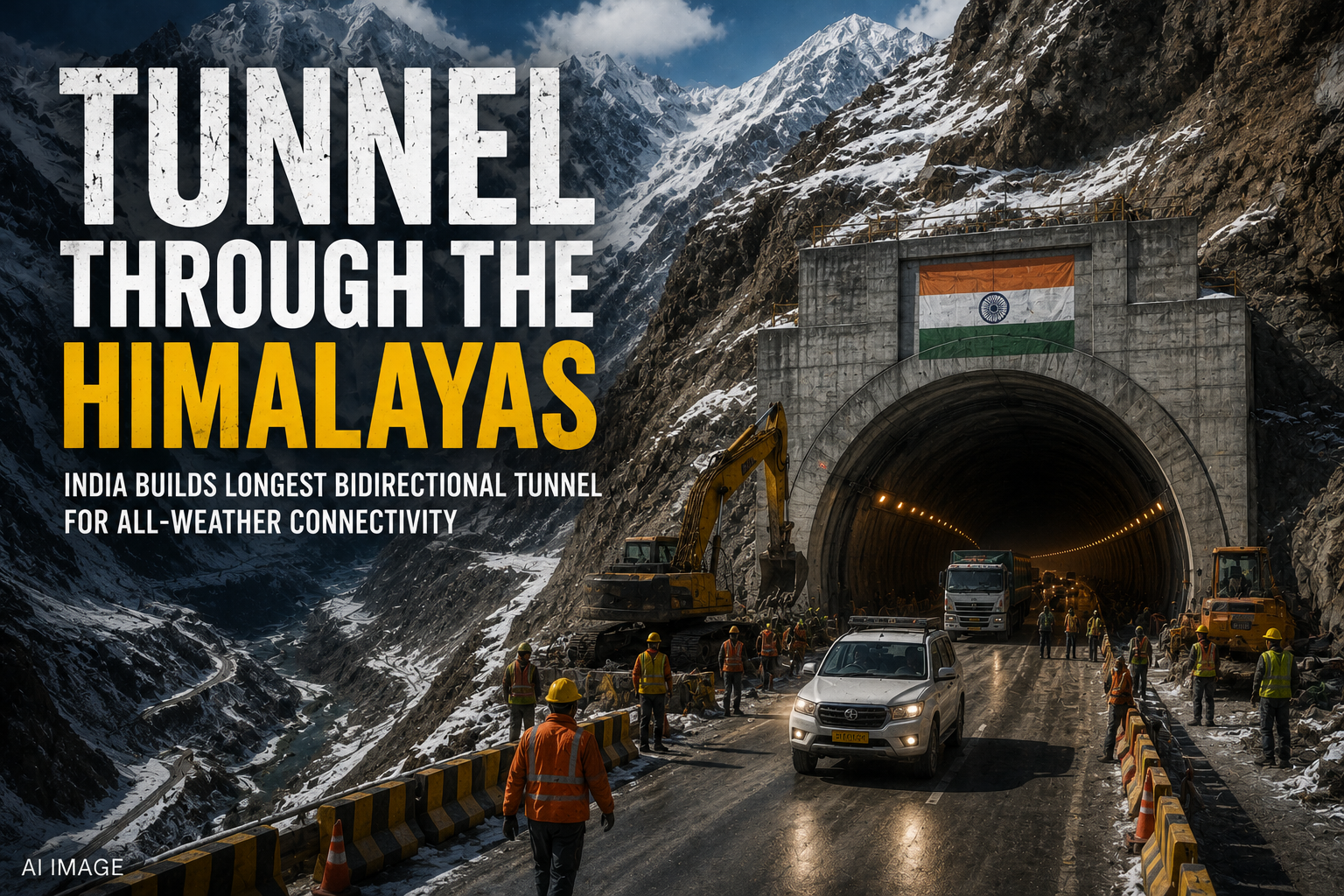
For decades, the Zojila Pass has represented both a lifeline and a challenge.
The mountain corridor connects Kashmir with Ladakh, but heavy snowfall, avalanches, and harsh weather often force long seasonal closures, disrupting travel, supplies, tourism, and economic activity.
Now, India has crossed a major milestone in addressing that challenge.
The final breakthrough in the Zojila Tunnel project marks a significant step toward establishing year-round road connectivity between Kashmir and Ladakh, one of the country’s most strategically and geographically demanding regions.
What Happened
According to officials, the final breakthrough of the Zojila Tunnel was achieved after a controlled blast removed the remaining rock barrier separating both ends of the tunnel. Union Road Transport and Highways Minister Nitin Gadkari participated in the breakthrough event.
The tunnel is approximately 13.15 kilometres long and runs beneath the Zojila Pass on the Srinagar-Leh highway corridor. Officials have described it as one of India’s most ambitious mountain infrastructure projects.
Once completed and operational, the tunnel is expected to reduce travel time across the pass from several hours to around 15 minutes under normal conditions.
Background
The Zojila Pass sits at an altitude of approximately 11,578 feet and serves as one of the most important gateways connecting Ladakh with the rest of India.
Historically, the route has remained vulnerable to prolonged winter closures due to heavy snowfall and extreme weather conditions. These disruptions affect civilian movement, commercial transport, tourism activity, and essential supplies.
To address these challenges, the government approved the Zojila Tunnel project as part of a broader effort to improve connectivity in border and mountainous regions.
The project includes not only the tunnel itself but also associated roads and supporting infrastructure connecting Sonamarg in Kashmir to Minamarg in Ladakh.
Why It Matters
The significance of the Zojila Tunnel extends beyond transportation.
For residents of Ladakh, year-round connectivity could improve access to goods, services, healthcare, education, and economic opportunities.
For businesses, more reliable transportation may reduce logistical disruptions and improve the movement of supplies and tourism-related activity.
For governments, the project reflects a broader policy focus on improving connectivity in remote and strategically important regions.
The tunnel also has national security implications. The Srinagar-Leh corridor plays a critical role in maintaining access to border areas, and all-weather connectivity could improve the movement of personnel and supplies when weather conditions would otherwise disrupt transport.
Analysis
The biggest story is not that India has built another tunnel.
The bigger story is that infrastructure in difficult terrain is increasingly becoming a tool of economic integration and strategic resilience.
Historically, geography imposed severe constraints on mobility across the Himalayas. Entire regions could remain partially isolated for months due to weather conditions.
Projects such as the Zojila Tunnel seek to reduce the economic cost of geography.
The tunnel also highlights a broader trend in Indian infrastructure policy. In recent years, governments have increasingly focused on roads, tunnels, railways, and logistics corridors in border states and remote regions.
There is another important lesson.
Infrastructure projects are often measured by their construction cost. Their real value, however, is frequently determined by the opportunities they create after completion—faster travel, lower transport costs, greater tourism activity, stronger supply chains, and improved access to markets.
In that sense, the Zojila Tunnel represents more than an engineering achievement. It represents an attempt to permanently alter the connectivity equation of an entire region.
Conclusion
The final breakthrough of the Zojila Tunnel marks a major milestone, but the project is not yet complete.
When fully operational, the tunnel is expected to provide reliable, all-weather connectivity between Kashmir and Ladakh, reducing travel disruptions caused by extreme weather and improving access across a strategically important corridor.
The most important takeaway is simple:
The project is not merely about shortening a journey.
It is about reducing the distance that geography has historically imposed on people, businesses, and institutions in one of India’s most challenging regions.
With AI inputs