READ TIME: 6 Minutes
Two separate trekking expeditions in Uttarakhand have triggered large-scale rescue operations after trekkers Babita Pandey and Vishesh Chauhan went missing on different mountain routes within days of each other.

While authorities have not established any connection between the two cases, both incidents have highlighted the risks associated with high-altitude trekking, particularly during periods of unpredictable weather and challenging terrain. Rescue teams continue to search for both individuals as concerns grow among their families and local communities.
What Happened
According to officials, Babita Pandey, a 24-year-old MBA student from Uttarakhand, disappeared while camping near the Dayara Bugyal trekking route in Uttarkashi. Authorities were informed after fellow trekkers reportedly failed to locate her following an overnight disappearance from the campsite.
In a separate incident, Vishesh Chauhan, a trekker from Noida, went missing while returning from the Pindari Glacier route in Bageshwar district. Reports suggest he became separated from a local porter during the descent and did not reach the designated base point.
Background
Uttarakhand remains one of India’s most popular trekking destinations, attracting thousands of adventure enthusiasts each year. Routes such as Dayara Bugyal and Pindari Glacier are known for their scenic landscapes but also present significant challenges, including sudden weather changes, difficult terrain and communication limitations.
Search and rescue operations in these regions often require coordination between multiple agencies because of the remoteness of trekking routes and the limited accessibility of mountain terrain.
Key Developments
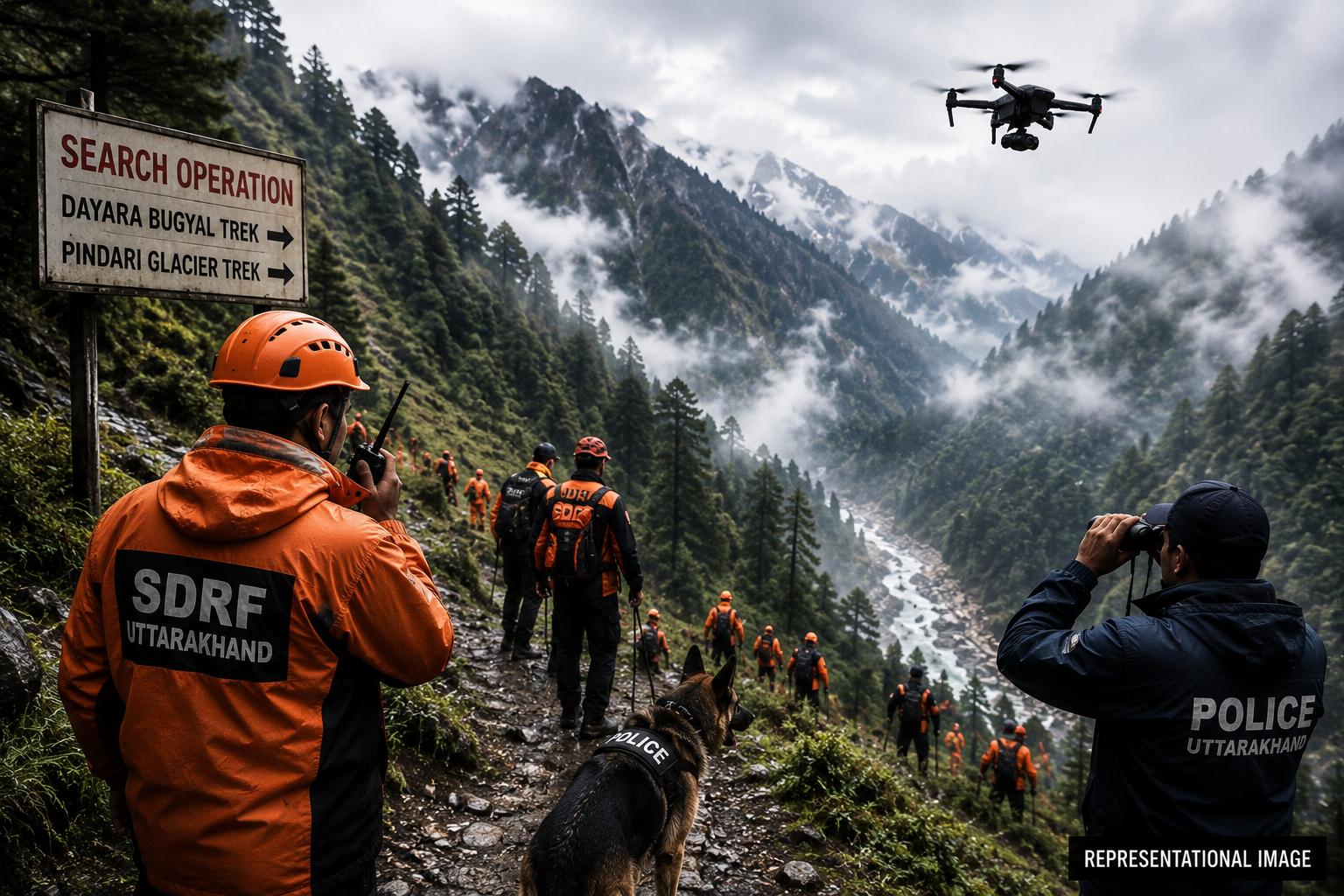
The search for Babita Pandey has entered an intensive phase involving personnel from the Army, ITBP, SDRF, NDRF, police, forest officials and local volunteers. Authorities have also deployed drones and sniffer dogs to cover difficult sections of the trekking route.
Meanwhile, rescue teams searching for Vishesh Chauhan recovered his camera near a suspected location on the trail. Search personnel have continued operations along riverbanks, forest stretches and nearby ravines despite weather-related disruptions.
A separate investigation linked to Babita Pandey’s trek has reportedly uncovered questions regarding the use of an allegedly forged or expired trekking permit, adding another dimension to the ongoing inquiry.
Why It Matters
For Citizens
The incidents serve as a reminder of the risks associated with mountain tourism and the importance of adhering to safety protocols.
For Governance
The cases may prompt scrutiny of trekking permit systems, route monitoring mechanisms and emergency response preparedness in Uttarakhand.
For Tourism
Adventure tourism is a major contributor to the state’s economy. Incidents involving missing trekkers can influence public perceptions of safety and preparedness.
For Rescue Agencies
The operations underscore the challenges faced by emergency responders working in remote and weather-sensitive environments.
Analysis
While trekking-related emergencies are not uncommon in mountainous regions, the near-simultaneous disappearance of two trekkers has drawn attention to broader issues within adventure tourism management.
Questions are being raised regarding route monitoring, permit verification, communication systems and emergency preparedness. Reports regarding alleged permit irregularities in one of the cases may further intensify scrutiny of trekking administration procedures.
Experts often point out that changing weather conditions, lack of real-time tracking and difficult terrain can significantly complicate rescue operations, even when large numbers of personnel are deployed.
Questions That Remain
• What exactly happened in the hours before both trekkers disappeared?
• Can weather conditions provide clues about their movements?
• Were all trekking regulations properly followed?
• Could additional tracking systems improve trekker safety?
• What lessons will emerge from these rescue operations?
What Happens Next
Authorities are expected to continue search operations while expanding the scope of investigation into both cases.
Officials have indicated that rescue teams will keep exploring nearby forests, riverbanks, campsites and inaccessible mountain sections as weather conditions permit. Investigations into permit compliance and trek management procedures may also continue in parallel.
Frequently Asked Questions
Q1: Who are the missing trekkers?
Babita Pandey is a 24-year-old MBA student who went missing near Dayara Bugyal, while Vishesh Chauhan is a trekker from Noida who disappeared on the Pindari Glacier route.
Q2: Have rescue teams found any evidence?
Authorities have recovered Vishesh Chauhan’s camera, but neither trekker has been located so far.
Q3: Why are these cases receiving attention?
The incidents involve separate disappearances on major trekking routes and have raised concerns regarding safety protocols, weather preparedness and trekking oversight.
Conclusion
As rescue teams continue their search across Uttarakhand’s mountains, the focus remains on locating Babita Pandey and Vishesh Chauhan. Beyond the immediate effort to find the missing trekkers, the incidents are likely to spark wider discussions about trekking safety, emergency preparedness and oversight mechanisms in one of India’s most active adventure tourism destinations.
With AI inputs