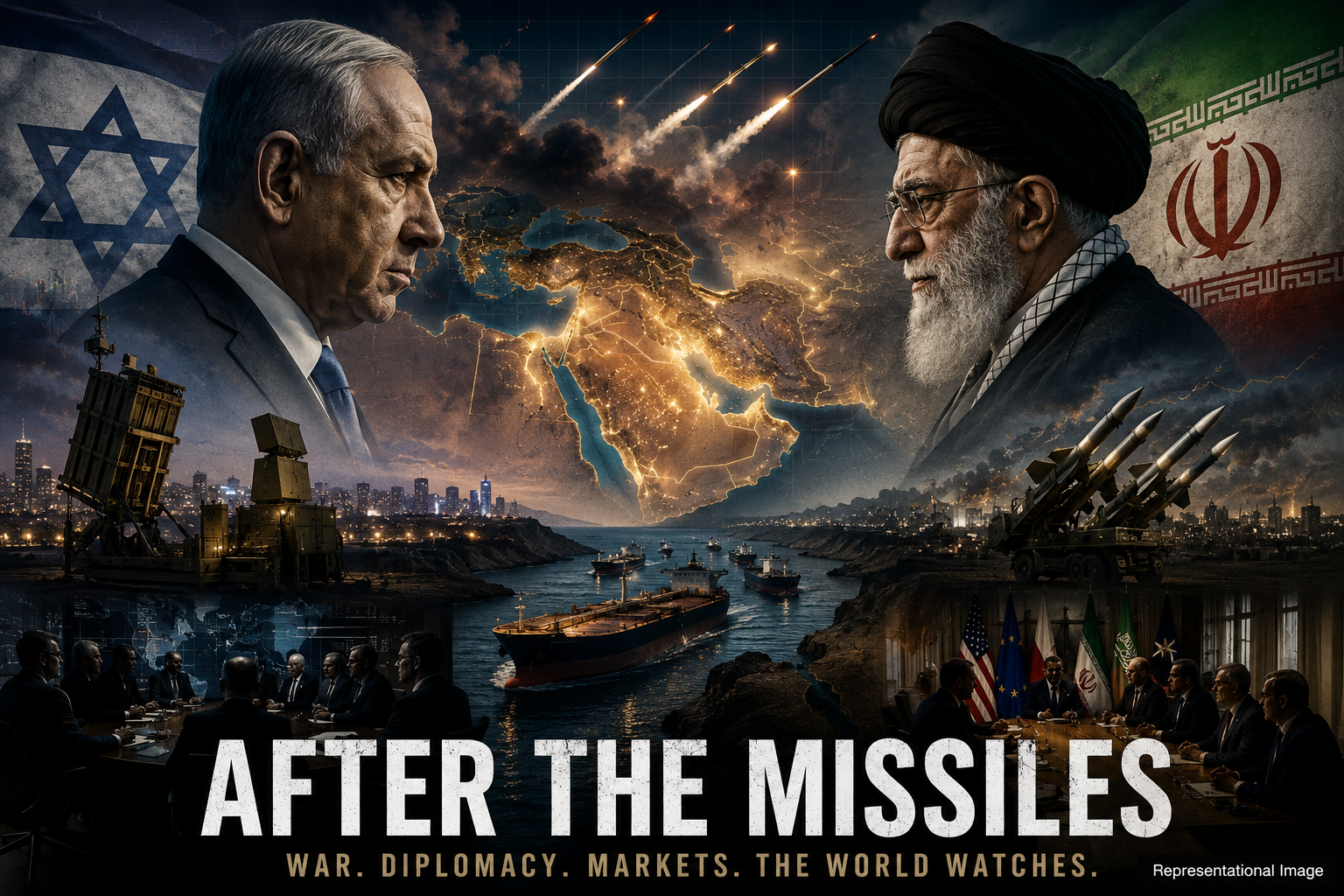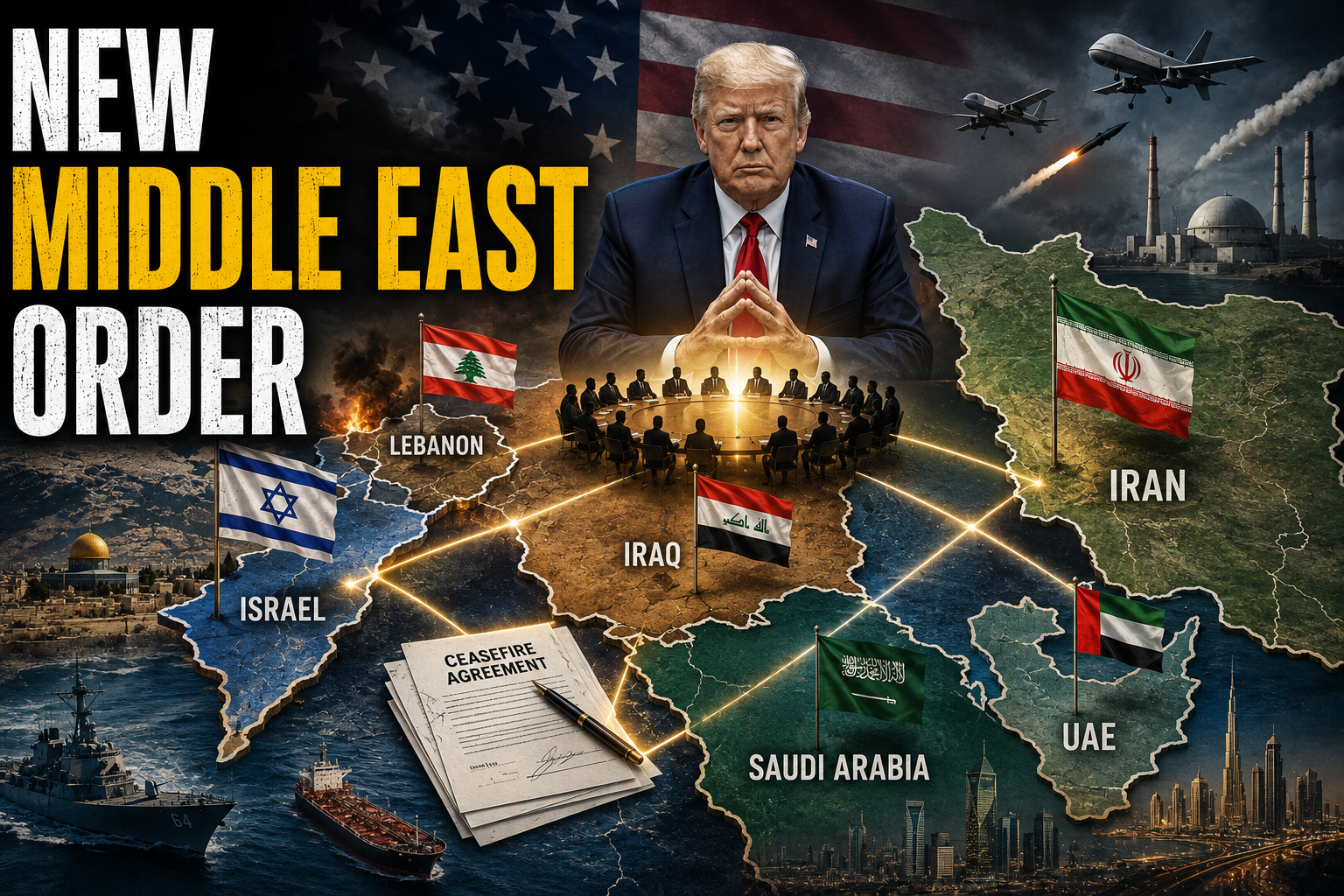
The Middle East is not returning to its old normal. It is moving into something more unstable: a U.S.-centered reset that is being welcomed in some capitals and deeply criticized in others. Reuters reported on June 18 that Washington and Tehran had signed an interim deal after months of war, while AP and Reuters separately reported that a Lebanon ceasefire was being brokered by the U.S. and Qatar, with Iran also playing a role. At the same time, Israeli officials and Gulf observers have warned that the arrangement may be more of a pause than a peace.
What Happened
According to Reuters, the new U.S.-Iran agreement is the first of its kind since Iran’s 1979 revolution and is intended to create a 60-day ceasefire while longer-term negotiations continue. Reuters said the deal was signed by U.S. President Donald Trump and Iranian President Masoud Pezeshkian at Versailles during the G7 summit, and that it also includes a ceasefire in Lebanon.
But the response has been far from unified. Reuters reported that Israeli officials view the deal as strategically dangerous because it does not fully address Iran’s missile program or provide a path to dismantle its nuclear capabilities. AP said U.S. Vice President JD Vance publicly criticized Israeli officials for attacking the deal and warned that President Trump remains Israel’s only reliable ally.
The Lebanon ceasefire has also been fragile. Reuters reported on June 19 that Israel and Hezbollah agreed to a ceasefire starting at 4 p.m. local time, but Israeli airstrikes continued shortly after the truce was supposed to take effect. Reuters also said the agreement was brokered by U.S. and Qatari negotiators, with Iran playing a key role.
Background
For years, the Middle East’s security architecture depended on a simple assumption: the United States would remain the central power managing deterrence, alliances and crisis response. That model has been badly strained by repeated wars, regional missile exchanges and the erosion of trust between Washington and some of its partners. Reuters reported earlier this year that U.S. military deployments in the region reached one of their largest postures in years, underscoring how much the conflict environment had already escalated before the latest diplomatic reset.
The problem is that military pressure has not fully removed the underlying threats. Reuters reported that Iran’s Revolutionary Guards have covertly established cells in Iraq to carry out drone attacks on Gulf states hosting U.S. forces, including Kuwait, Saudi Arabia and the UAE. That suggests the regional conflict is no longer just about state armies. It also includes deniable operations, proxy networks and pressure on the Gulf’s energy and security infrastructure.
At the same time, the Gulf is watching the U.S. more cautiously than before. Reuters reported that UAE markets fell on June 19 as uncertainty grew around the U.S.-Iran truce and the wider regional outlook, a sign that political instability is now being priced into financial sentiment as well.
Why It Matters
For citizens across the Middle East, this matters because every ceasefire, strike or deal changes the risk of displacement, inflation and fresh violence. For Gulf economies, the stakes include shipping safety, oil markets and investor confidence. For governments, the issue is whether Washington can still guarantee security while also forcing regional actors to compromise. For businesses, the concern is whether trade routes, insurance costs and capital flows can remain stable.
For Israel, the deal is being read as a reduction in strategic leverage. For Iran, it is an opening to regain room, recognition and bargaining power. For Gulf states, it creates a troubling possibility: that the U.S. may be willing to manage the region through temporary bargains that reduce immediate conflict but leave the larger security burden unresolved. Reuters described Gulf states as feeling sidelined and uncertain about continued U.S. protection.
Analysis
The most important thing to understand is that the “new Middle East order” is not a settled order at all. It is a temporary balance built on exhaustion, fear and mutual vulnerability. The U.S. is central again, but not because the region trusts Washington more than before. It is central because no other actor can currently impose a ceasefire, manage an Iran deal and keep Israel, Lebanon and the Gulf on the same diplomatic track at once. That is an inference from the current sequence of Reuters and AP reporting.
The criticism is just as revealing as the deal itself. Israel’s objections show that even close U.S. allies are no longer assuming that Washington will automatically align with their preferred security terms. AP reported that Israeli officials attacked the interim deal and that Trump later expressed frustration with Netanyahu’s position. That matters because it shows the alliance is still intact, but the political chemistry is weaker than it used to be.
The Gulf’s anxiety is different. Gulf states are not simply objecting to the deal; they are worried about being exposed to the consequences of it. Reuters reported that Iran’s covert cells in Iraq are already being used to threaten Gulf neighbors, and the UAE market reaction shows how quickly uncertainty translates into economic caution. In other words, the Gulf may benefit from de-escalation, but it also fears becoming the buffer zone if the truce collapses.
This is where the larger trend becomes clear. Middle East politics is shifting away from a single grand security architecture and toward a series of managed, transactional arrangements. Each deal is narrower than the conflict beneath it. Each ceasefire buys time rather than resolution. Each diplomatic breakthrough also contains the seeds of the next accusation: too soft on Iran, too harsh on Israel, too uncertain for the Gulf, too dependent on Washington.
There is also a historical comparison worth making. In the past, U.S. power in the region was often measured by the ability to freeze conflict into a stable framework. Today, the measure is narrower: can Washington stop the region from slipping back into war next week, next month or after the next drone attack? That is a much lower bar, but it may be the only realistic one left. The current order is therefore less about peace than about crisis management.
POLITICAL IMPACT
Politically, the new order strengthens the U.S. as a broker but weakens the illusion that Washington can satisfy everyone at once. Israel wants firmer guarantees. Iran wants legitimacy and relief. Gulf states want protection without becoming the frontline. The U.S. is now trying to hold together an arrangement that all three camps support only conditionally. That makes the arrangement powerful in the short run and fragile in the medium run.
MARKET IMPACT
Markets are already treating the Middle East as a live political risk premium again. Reuters reported lower UAE equities amid truce uncertainty, while the wider regional picture remains tied to oil, shipping and investor confidence. If the ceasefire holds, risk assets may recover. If it breaks, the pressure will likely return first through energy routes and Gulf financial markets.
Conclusion
The new Middle East order is not a clean reset. It is a temporary and heavily criticized U.S.-led attempt to stop the region from sliding back into wider war. Israel thinks the deal is too soft. The Gulf thinks it may be too exposed. Iran appears to be keeping pressure options alive. That is why this moment feels less like a peace settlement and more like a hard pause. The real test is not whether the deal was announced. It is whether the region can survive the first major crisis after it.
With AI inputs