Read Time: 5 mins
India’s event industry is no longer limited to wedding planners and corporate conferences. What was once considered a support service has evolved into a major economic ecosystem involving entertainment, tourism, hospitality, digital creators, artists, production companies and brands.
As audiences increasingly seek experiences rather than products, the business of bringing people together is becoming one of India’s fastest-growing opportunities.
What Happened
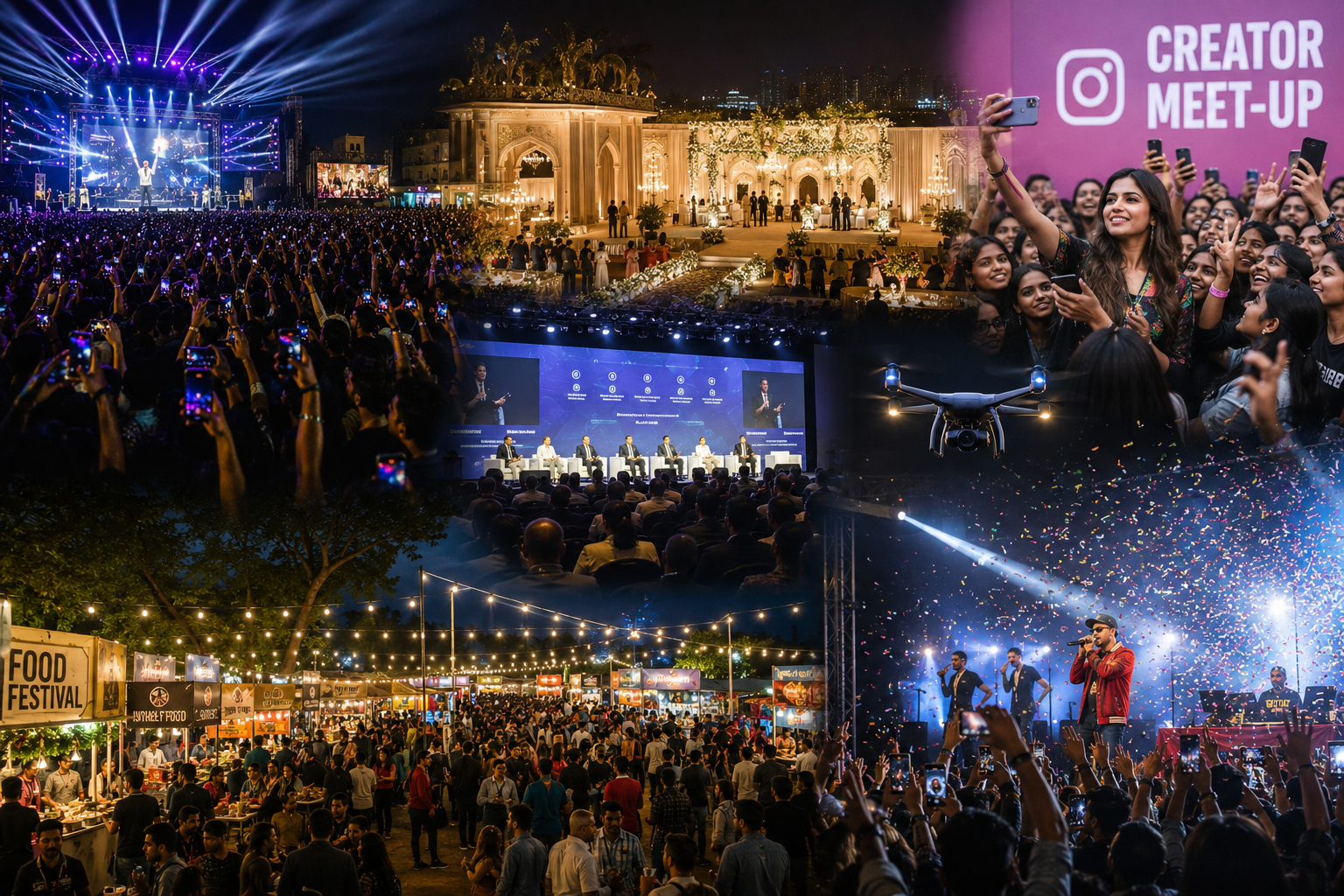
Over the last few years, India has witnessed a surge in large-scale concerts, stand-up comedy tours, creator meetups, business summits, sporting experiences, food festivals and destination weddings.
Global artists are increasingly viewing India as a viable tour destination, while homegrown performers are building independent audiences through social media before monetising them through live events.
At the same time, brands have begun shifting portions of their advertising budgets toward experiential marketing, where consumers engage directly with products and communities rather than simply viewing advertisements.
Background
Traditionally, the Indian event sector was heavily dependent on weddings and corporate events. While those segments remain strong, newer categories are emerging rapidly.
The creator economy has produced influencers capable of attracting thousands of attendees. Independent musicians who once relied on record labels are now filling venues through direct fan engagement. Even niche communities—from gaming and fitness to entrepreneurship and spirituality—are creating successful event ecosystems.
This shift reflects a larger global trend: people are increasingly spending money on experiences, networking opportunities and community participation.
Why It Matters
The significance of the industry extends far beyond entertainment. Events generate demand for hotels, transportation, food services, technology providers, security agencies, photographers, designers, production crews and local businesses. For new artists, events provide a direct path to monetisation without relying solely on television channels, film studios or major labels. For brands, events create deeper consumer engagement. For cities, large-scale events attract tourism and investment. In many ways, the event industry acts as a multiplier that benefits numerous sectors simultaneously.
Analysis
The most interesting aspect of India’s event boom is that it is becoming increasingly decentralised.
For decades, opportunities were concentrated in Mumbai, Delhi and a handful of major cities. Today, audiences in Jaipur, Indore, Surat, Lucknow, Coimbatore and Guwahati are demonstrating strong demand for premium experiences.
This creates a new opportunity for regional artists, local event companies and independent creators. The future may not belong solely to celebrity performers but also to niche communities capable of attracting highly engaged audiences.
Another overlooked trend is the convergence of creators and events. Influencers, podcasters, journalists, educators and coaches are increasingly becoming event businesses themselves.
The next generation of event entrepreneurs may emerge not from hospitality backgrounds but from content creation and community building.
MARKET IMPACT
Growing investment in live entertainment, destination weddings, experiential marketing and creator-led events is expected to create opportunities across hospitality, travel, media production, technology and retail sectors.
Industry observers believe the sector could become a significant contributor to employment generation, particularly for freelancers, creative professionals and small businesses.
Conclusion
The biggest question is whether India’s event industry is merely experiencing a temporary boom or undergoing a structural transformation.
Current trends suggest the latter.
As incomes rise, digital audiences mature and consumers seek real-world experiences, events are becoming a powerful business category in their own right. The next decade may not only produce larger concerts and weddings—it may create entirely new careers, new artists and new business models across India.
With AI inputs